

TL;DR
Are home lifts safe? Yes. Home lift safety depends on proper design, professional installation, regular maintenance, and compliance with recognized safety standards such as EN 81-41. This standard covers platform protection, door interlocks, emergency controls, electrical safety, and operating systems that help protect passengers during everyday use.
What is EN 81-41?
EN 81-41 is a European safety standard that specifies the design, construction, installation, and testing requirements for vertical lifting platforms used by people with impaired mobility. If you’re evaluating a lift for your home, our guide on home lift safety for Filipino homeowners explains the practical safety features that matter most.
What Safety Features Does EN 81-41 Cover?
Good home lift safety also depends on professional installation and regular maintenance.
- Maximum travel speed
- Platform protection
- Emergency stop function
- Door interlocks
- Electrical safety
- Obstruction detection
- Emergency lowering during a power interruption
- Operating controls
- Inspection and maintenance requirements
By following the requirements of EN 81-41, manufacturers help ensure that applicable lifting platforms include measures designed to support safe and reliable operation.
What makes a home lift safe?
A home lift is made safe by several systems working together, including mechanical protection, door interlocks, obstruction detection, emergency controls, battery backup, and alarm or communication features. If an unsafe operating condition is detected, the lift’s safety system can prevent or stop movement.
| Safety Area | How It Helps |
| Mechanical protection | Controls lift movement and help prevent uncontrolled travel |
| Door protection | Prevents operation when landing doors are not safely secured |
| Obstruction detection | Stops movement when an object enters a protected area |
| Emergency controls | Allows lift movement to be stopped during an emergency |
| Battery backup | Supports safe lowering during a power interruption |
| Alarm and communication | Help passengers request assistance when necessary |
How Does Mechanical Protection Work?
Mechanical protection refers to components that physically control or stop lift movement. Depending on the drive system, these may include the drive screw, drive nut, safety nut, guide rails, braking mechanisms, and overspeed protection.
How Does EN 81-41 Improve Home Lift Safety?
Emergency stop buttons are an important part of home lift safety because they allow the platform to be stopped immediately during an emergency.
How Do Door Interlocks Improve Home Lift Safety?
Door protection can include electromechanical interlocks that verify a landing door is closed and locked before the control system allows the lift to move.
What Happens to a Home Lift During a Power Outage?
Depending on the lift model and configuration, an emergency battery system can provide power for controlled lowering or travel to a designated landing during a power interruption. You can read a detailed explanation in what happens to a home lift during a power outage in the Philippines.
Can a home lift suddenly fall?
A properly designed screw-driven home lift is built with multiple systems to help prevent uncontrolled downward movement. The platform moves along a threaded steel drive screw using a drive nut, which mechanically controls its vertical movement between floors.
The system includes a heavy-duty threaded drive screw, primary drive nut, separate safety nut, and braking protection. Because the platform remains mechanically engaged with the screw during normal travel, these components work together to reduce the risk of uncontrolled downward movement.
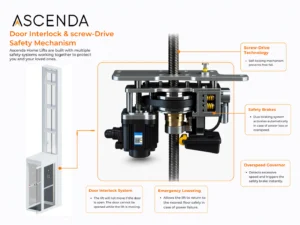
Inside an Ascenda by Cibes home lift: Key safety components, including the screw-drive mechanism, door interlocks, safety brakes, overspeed protection, and emergency lowering system, work together to support safe and reliable operation.
Are Home Lifts Safe During a Power Outage?
Yes. Ascenda Home Lifts are equipped with a battery-backed emergency lowering system designed to operate during a power outage. If the main power supply is interrupted while the lift is in use, the backup system activates and moves the lift to the nearest floor, allowing passengers to exit.
The emergency battery can also support essential safety functions such as emergency lighting and alarm systems. Together with the screw-drive system and mechanical safety features, these systems help protect passengers during a loss of normal power.
Frequently Asked Questions About Home Lift Safety
Are home lifts generally safe?
Yes. Modern home lifts are designed with mechanical, electrical, and emergency protection systems. Their long-term safety also depends on professional installation, proper use, and regular servicing.
Can a home lift fall if the power goes out?
No, A properly designed screw-driven home lift does not simply fall when electricity is lost. Its mechanical drive system controls platform movement, while emergency backup systems can provide controlled lowering.
Are home lifts safe for children?
Yes, Home lifts can be used in family homes with appropriate safety measures and adult supervision. Door interlocks, obstruction detection, and access controls provide additional protection.
Do home lifts need regular safety inspections?
Yes. Professional maintenance helps ensure that mechanical components, doors, sensors, batteries, emergency controls, and other safety systems continue to work correctly.
Learn more about home lift safety
Experience Centers and Technical Station Address
Makati City | Balintawak – Quezon City | Mandaluyong City | Cebu City | Ilo-Ilo City | Davao City | Cagayan De Oro City

CIBES AUTHOR
Mylen Posas is the Aftersales Manager at Cibes Lift Philippines. She oversees aftersales operations, ensuring every customer receives reliable support from installation through long-term maintenance. With a strong focus on service quality and customer satisfaction, she works closely with the technical team to deliver prompt assistance and help maintain the long-term performance and safety of every Cibes home lift.

Contact Ascenda today for a free home lift quotation. Call +63 917 135 1824, visit www.ascendalift.com.ph, or email ph@ascendalift.com


Leave A Comment