TL;DR
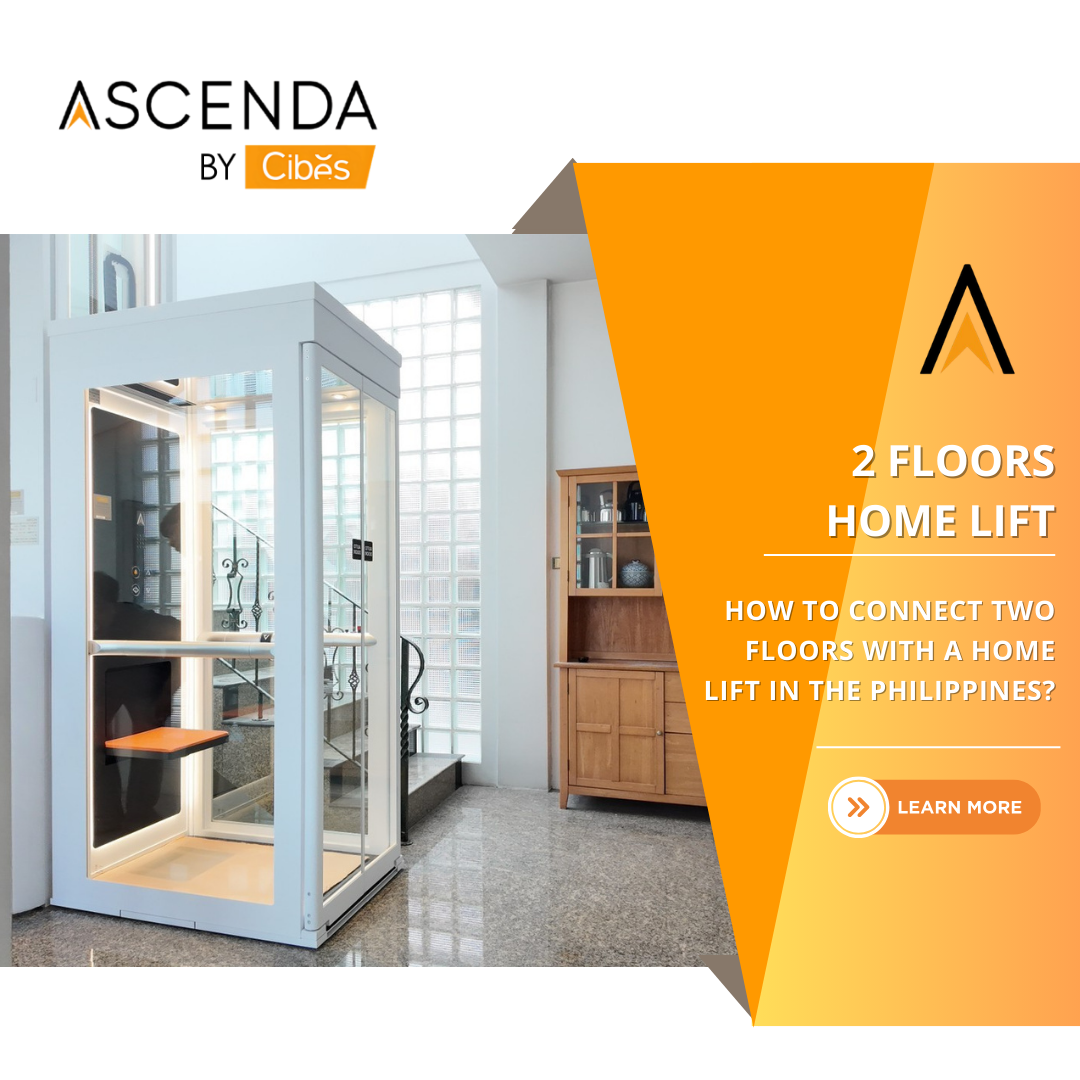
The Ascenda home lift connects two floors using either a floor hatch installation or a void mezzanine installation with a gate. Both methods use screw-driven technology, run on single-phase power, and do not require a machine room, making them suitable for many Philippine homes with limited space.
What are the main ways to install a lift between two floors?
There are two common installation approaches depending on your home layout and structural conditions.
Floor hatch installation
This method creates a precise opening in the floor where the lift travels between levels. When the lift is on another floor, the hatch closes flush with the flooring.
Why homeowners choose it:
- Saves space in compact homes
- Keeps the lift discreet when not in use
- Works well in existing houses with limited room
Minimum space requirement (S size):
- Hatch cutout: 91.4 cm × 112.7 cm
- Cabin cutout: 83.8 cm × 109 cm
The hatch can be finished with vinyl, tile, or carpet to match the floor.
Safety features include:
- Locking hatch mechanism
- Weight sensors that stop movement if pressure is detected
- Emergency stop controls
- Battery backup
Void mezzanine installation with gate
In homes with an open void or stairwell, the lift can travel through the space with a landing gate.
Why this option works well:
- Suitable for open-plan layouts
- No need for a floor hatch cover
- Provides clear visual access to the lift
The landing gate opens and closes in sync with the lift doors, helping maintain safety during operation.
Hatch vs mezzanine installation: which is better?
| Feature | Floor Hatch | Void Mezzanine |
|---|---|---|
| Best for | Compact homes | Open layouts |
| Floor cutting required | Yes | Usually no |
| Visual impact | Hidden when closed | Visible feature |
| Space efficiency | Very high | Moderate |
| Landing protection | Hatch cover | Safety gate |
Choosing between them depends on structure, design preference, and how you use the space.
What technology does the Ascenda lift use?
The lift uses screw-driven technology developed by Cibes Lift Group. This system is self-contained and does not need a separate machine room or hydraulic pit.
Key characteristics:
- Smooth start and stop
- Reliable operation
- Compact footprint
- Suitable for residential use
The lift operates on single-phase electricity, which is common in Philippine homes.
What sizes are available?
The Ascenda lift comes in four sizes: S, M, L, and XL.
The XL configuration can include through-access, allowing entry and exit on opposite sides, which can help with layout flexibility.
Is the lift energy efficient?
Yes. Screw-driven systems typically consume power only during movement. Since it runs on standard residential power, it integrates easily into typical household electrical setups.
What safety features are included?
Common safety elements include:
- Emergency stop button
- Door interlocks
- Battery backup for power interruptions
- Automatic landing protection
- Certified safety systems
The lift is certified to European EN standards and North American ASME requirements.
Is the Ascenda lift suitable for homes in the Philippines?
It is designed for private residences and works well in two-storey or multi-level homes where stairs may be challenging or space is limited.
Homeowners often consider it when:
- Planning for aging in place
- Improving accessibility
- Adding convenience between floors
- Renovating or building a new house
When might each installation method not be ideal?
- Hatch installation may require structural assessment before cutting concrete slabs.
- Mezzanine installation needs sufficient vertical opening or void space.
- Local building requirements should always be checked before installation.
Consulting with a qualified installer helps confirm feasibility.
Why choose the Ascenda lift?
Homeowners and designers value it for:
- Compact design that fits tight spaces
- Flexible installation options
- Established engineering heritage from Cibes Lift Group
- Quiet and smooth operation
- Professional installation support in the Philippines
Frequently asked questions
Q: How much space is needed for a small home lift?
A: The smallest configuration can require just over one square meter of floor opening, depending on layout.
Q: Can a home lift run on regular household power?
A: Yes, it operates on single-phase electricity commonly available in residential properties.
Q: Does it require a machine room?
A: No, the system is self-contained.
Q: Is it safe during power interruptions?
A: Battery backup allows safe operation if power is lost.
Q: Can it be installed in existing houses?
A: In many cases yes, subject to structural evaluation.
Planning to connect two floors?
Choosing the right lift involves understanding your space, structure, and long-term needs. A site assessment helps determine the best installation method and size.
Contact a qualified lift provider to discuss your home layout and options.