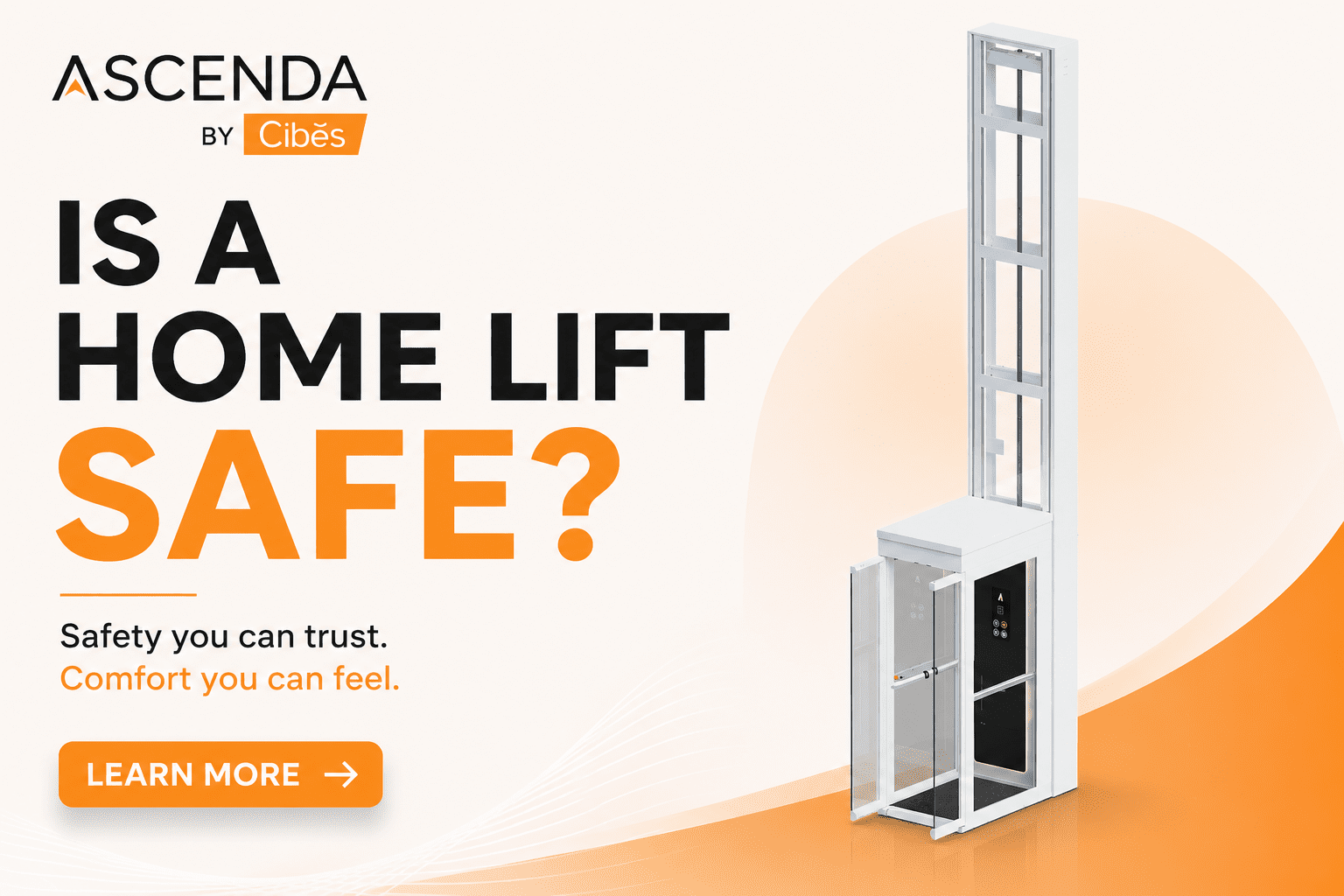
Is a Home Lift Safe? Everything Filipino Homeowners Need to Know
TL;DR
Many Filipino homeowners are considering home lifts as a practical way to improve accessibility in multi-storey homes. Whether you’re caring for elder parents, planning to age in place, or simply looking for a more convenient way to move between floors, safety is often the first concern.
So, is a home lift safe?
Yes. Modern home lifts are designed with multiple layers of safety technology, including emergency stop systems, obstruction sensors, battery backup, and enclosed cabins. Many residential lifts also comply with international safety standards such as EN 81-41, helping ensure safe and reliable operation in everyday home environments.
The key is choosing a lift from a reputable manufacturer and ensuring it is installed and maintained by qualified professionals.
Why Do People Worry About Home Lift Safety?
Many concerns about home lifts come from misconceptions about traditional commercial elevators.
Homeowners often worry about:
- Getting trapped inside the lift
- Sudden drops during operation
- Power outages causing lift failures
- Children using the lift unsupervised
- Mechanical breakdowns
- Emergency situations during travel
Modern residential lifts are specifically engineered to address these concerns. Today’s systems include multiple safety mechanisms designed to protect passengers and reduce operational risks.
What Safety Features Should a Home Lift Have?
When evaluating a home lift, it’s important to understand the safety systems built into the product.
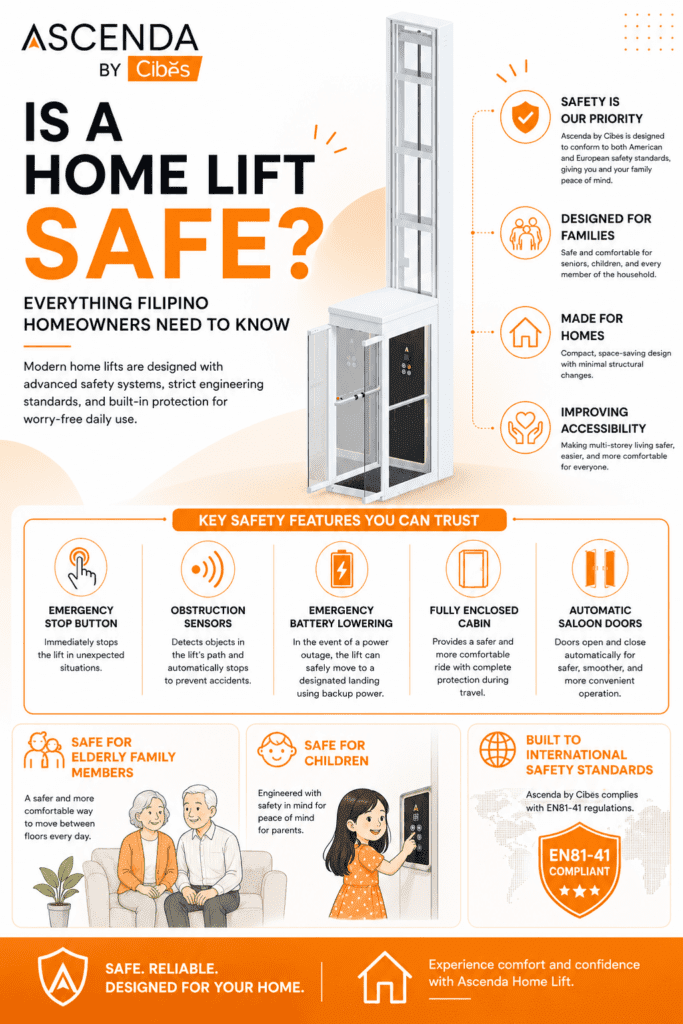
Home Lift Safety Features at a Glance
| Safety feature | What it does | Why it matters |
|---|---|---|
| Emergency stop button | Stops lift movement immediately | Gives users direct control in unexpected situations |
| Obstruction sensors | Detect objects in the lift's path | Helps prevent accidents and damage |
| Emergency battery backup | Moves the lift to a landing during power interruptions | Prevents passengers from becoming stranded |
| Fully enclosed cabin | Surrounds passengers during travel | Improves safety and comfort |
| Hold-to-run controls | Lift operates only while the button is pressed | Reduces accidental operation |
| Automatic door safety system | Prevents operation when doors are not properly secured | Enhances passenger protection |
What Does an Emergency Stop Button Do?
An emergency stop button allows passengers to halt lift movement immediately if needed. This feature provides an additional layer of control and reassurance during operation.
How Do Obstruction Sensors Keep a Home Lift Safe?
Obstruction sensors monitor the lift’s travel path. If an object is detected, the lift automatically stops until the obstruction is removed. This helps protect users, pets, and property.
What Happens During a Power Outage?
Power interruptions can occasionally occur in parts of the Philippines.
Many modern home lifts include emergency battery backup systems that allow the lift to travel safely to the nearest landing during a power outage. This reduces the risk of passengers becoming trapped inside the lift.
Why Is a Fully Enclosed Cabin Important?
A fully enclosed cabin provides a protected travel environment and reduces exposure to moving components. It also improves comfort and privacy compared to open-platform alternatives.
What Are Hold-to-Run Controls?
Hold-to-run controls require the user to keep the control button pressed during travel. If the button is released, the lift stops immediately.
This simple feature helps prevent unintended movement and adds another level of operational safety.
Are Home Lifts Safe for Elder Family Members?
For many Filipino families, supporting aging parents is one of the main reasons for installing a home lift.
Stairs can become more difficult with age and may increase the risk of falls or injuries. A home lift provides a safer and more comfortable alternative for moving between floors.
Features that may benefit Elder include:
- Smooth and stable travel
- Automatic doors
- Handrail controls
- Fold-down seating options
- Easy-to-use controls
For homeowners planning to age in place, a home lift can become an important long-term accessibility investment.
Are Home Lifts Safe for Children?
Modern home lifts are designed with multiple safety systems that help reduce risks for children.
These include:
- Enclosed cabins
- Obstruction detection systems
- Controlled operation
- Emergency stop controls
However, like any household equipment, young children should use a home lift under adult supervision.
Do Home Lifts Follow International Safety Standards?
One of the most important questions homeowners should ask is whether the lift complies with recognized safety standards.
Many reputable residential lift manufacturers design their products to meet international safety requirements.
For example, Cibes Lift Group manufactures lifts that comply with EN 81-41, a European safety standard for vertical lifting platforms and accessibility lifts. This standard establishes requirements for passenger safety, operation, reliability, and accessibility.
Compliance with recognized standards helps ensure that lifts are designed, tested, and manufactured according to strict safety requirements.
Home Lift Safety Checklist for Filipino Buyers
Before purchasing a home lift, ask these questions:
✓ Does the lift comply with recognized international safety standards?
✓ Does it include emergency stop functionality?
✓ Is battery backup available during power outages?
✓ Does the lift have obstruction detection sensors?
✓ Is the cabin fully enclosed?
✓ Is regular maintenance support available locally?
✓ Does the installer have residential installation experience?
✓ Are spare parts readily available in the Philippines?
A reputable supplier should be able to answer all of these questions clearly.
How Is the Ascenda Home Lift Designed for Safety?
The Ascenda Home Lift by Cibes was developed for homeowners looking for a compact accessibility solution in two-storey homes.
According to Ascenda, the lift incorporates several safety-focused features, including:
- Screw-driven technology designed for stable movement
- Automatic saloon doors
- Fully enclosed cabin
- Obstruction detection systems
- Emergency stop functionality
- Through-floor design
- No machine room requirement
- Pitless installation options for many residential applications
The design focuses on providing accessibility while minimizing structural modifications to the home.
When Might a Home Lift Not Be the Right Solution?
While home lifts can be an excellent accessibility solution, they may not be suitable for every property.
Factors to consider include:
- Available installation space
- Structural limitations within the home
- Budget requirements
- Long-term maintenance commitments
A professional site assessment can help determine whether a home lift is the best solution for your property.
Does a Home Lift Need Regular Maintenance?
Yes.
Regular maintenance is essential for keeping a home lift operating safely and efficiently.
Routine servicing helps:
- Maintain safety systems
- Reduce wear on moving components
- Identify potential issues early
- Improve long-term reliability
- Extend equipment lifespan
Working with a manufacturer that provides professional after-sales support is just as important as selecting the right lift model.
Frequently Asked Questions
Q: Can a Home Lift Fall?
A: Modern residential lifts are designed with multiple safety systems that prevent uncontrolled movement. Reputable lifts are engineered and tested to meet strict safety requirements.
Q: What Happens if a Home Lift Loses Power?
A: Many home lifts include battery backup systems that allow the lift to move safely to a designated landing during a power interruption.
Q: Can a Home Lift Be Installed in an Existing Home?
A: Yes. Many residential lifts are designed specifically for retrofit projects and can often be installed in existing multi-storey homes with minimal structural changes.
Q: How Long Does a Home Lift Last?
A: The lifespan of a home lift depends on usage, maintenance, and operating conditions. With proper servicing, a quality residential lift can provide many years of reliable operation.
Final Thoughts
Home lift safety is a valid concern, but modern residential lifts are designed with multiple layers of protection to support safe daily use.
Features such as emergency stop buttons, obstruction sensors, battery backup systems, enclosed cabins, and international safety certifications help make today’s home lifts a reliable accessibility solution for many households.
For Filipino families planning for long-term accessibility, caring for elder parents, or improving convenience in a multi-storey home, a home lift can provide a safer alternative to stairs while supporting greater independence and comfort.
What is the first step to install a home lift in my house?
Choosing the right lift involves understanding your space, structure, and long-term needs. A site assessment helps determine the best installation method and size.
Contact a qualified lift provider to discuss your home layout and options.